Preserve Spinal Health with This Essential Lifting Equipment
Matthew Lannon
April 21, 2023 • 3 min read
Why the Weightlifting Belt?
The weightlifting belt is among the most critical pieces of equipment in heavy resistance training. For competitive athletes and recreational lifters alike, it serves as a foundational tool to uphold spinal health during heavy load manipulation. However, its utility extends beyond mere abdominal strapping—effective use requires an understanding of its contextual application. When employed correctly, the belt enhances compound lift performance and core stability, acting as a force multiplier for safe, efficient training.
How to Use a Weightlifting Belt
Proper belt placement involves positioning it around the core, superior to the iliac crests (hip bones). Optimal placement is individual-specific and requires iterative practice to refine: for example, the mechanics of the deadlift may necessitate a different belt height compared to the overhead press. The primary goal is to facilitate bracing—a technique that optimizes compound muscle activation by stabilizing the lumbopelvic region.
The belt interacts most directly with the core and gluteal complex. Research confirms that lifting belts mitigate spinal compression during compound exercises, thereby enhancing lumbopelvic and gluteal stability during functional loading (1). This is particularly beneficial for individuals with lumbar pain, as such discomfort is often attributed to gluteal and hamstring weakness.
Mastery of belt tension also requires deliberate practice. Unlike the inward core brace some athletes are trained to use, the belt demands an outward core brace—analogous to preparing for a blow to the abdomen. Critically, the belt must not impede respiratory function: it should be tight enough to facilitate the outward brace but loose enough to allow unobstructed breathing. For novice users, securing the appropriate buckle adjustment represents the initial learning challenge; respiratory techniques like the Valsalva maneuver (a controlled breath-holding strategy to increase intra-abdominal pressure) can further enhance core engagement (2).
When to Use a Weightlifting Belt
Lifting belts are most efficacious during weight-bearing compound exercises—closed-chain movements that demand increased intra-abdominal pressure (IAP) to stabilize the spine. They are contraindicated for extension-based (e.g., back extensions) or supine (e.g., bench press) exercises, as these movements do not require the same level of lumbopelvic support.
Evidence supports belt use for:
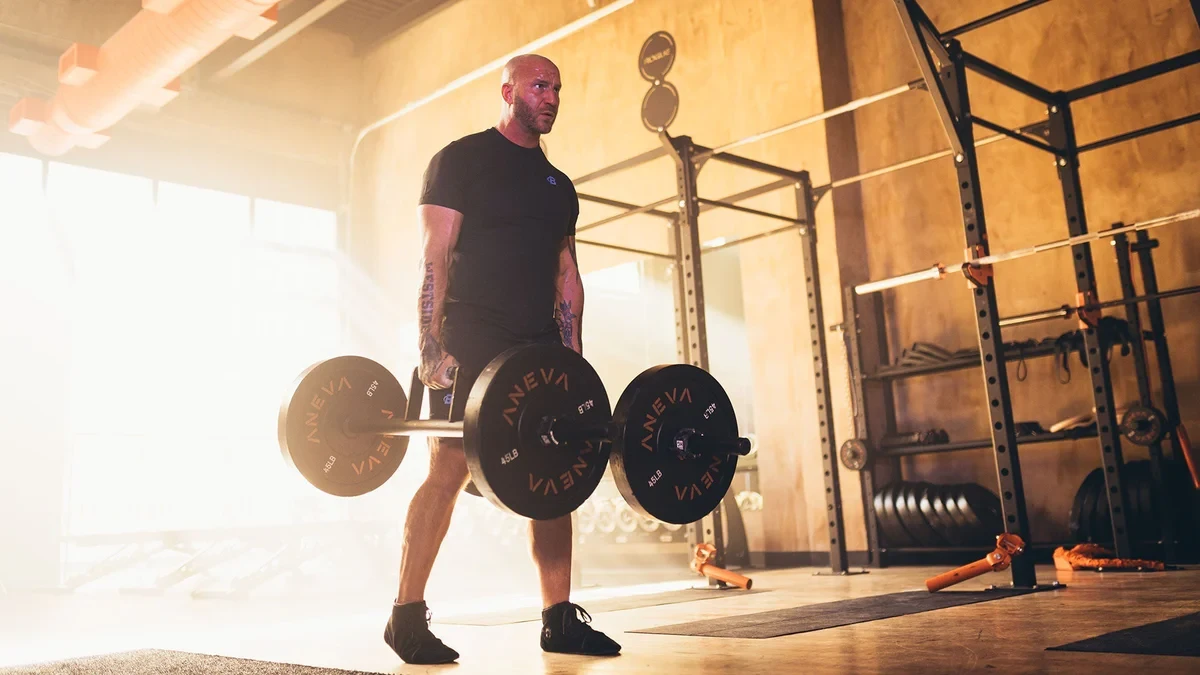
Barbell deadlifts
Back/front squats
Power cleans/snatches
Overhead presses
Notably, belts have demonstrated positive effects on exertional capacity during deadlifts, where spinal stress is highest (3).
Indications for Use
- Powerlifting & Maximal Loading:
Belts enhance safety for athletes lifting at or above 80% of their one-repetition maximum (1RM). Submaximal loads (below 80% 1RM) typically do not require a belt unless deliberate respiratory training is a priority. Competitive lifters should incorporate belt use into training to optimize performance and mitigate pre-competition injury risk.
- Spinal Injury History:
Athletes with a history of spinal or paraspinal injuries may use belts as a protective mechanism to limit excessive lumbar extension. However, individuals with acute lumbar pain should prioritize form correction (e.g., improving hip hinge mechanics) before initiating belt use or increasing load.
- Core-Specific Warm-Ups:
For both injured and competitive athletes, core-specific warm-up protocols (e.g., planks, bird-dogs) are recommended to prepare the musculature for the demands of belt-assisted lifting.
Contraindications & Misuses
General Fitness Training: Belts are inappropriate for non-heavy, functional movements (e.g., bodyweight squats, light rows).
Aesthetic Purposes: Some bodybuilders use belts pre-competition to temporarily reduce waist circumference and create a “V-taper.” This practice is not biomechanically sound and does not enhance functional core strength.
Compensating for Weak Abs: Belts do not replace targeted core strengthening. They are a protective adjunct for heavy loads—individuals seeking to improve core function should prioritize exercises like weighted planks or hollow-body holds over relying on a belt.
Wrap-Up
Compound lifts form the foundation of resistance training programs, and the weightlifting belt is a vital tool to enhance the safety of these exercises without compromising muscular adaptations. By mitigating spinal stress, optimizing movement mechanics, and supporting IAP generation, the belt balances performance and long-term musculoskeletal health for lifters.
Crucially, the belt is not a “magical accessory”—it is a specialized piece of equipment that complements (but does not replace) proper form, core strength, and progressive overload.
Works Cited